101 & Counting
Amazing Facts About Foundational Black Americans
Today’s Amazing Fact Is Being Prepared
What don’t you know about us? Explore the collection below while today’s fact is being prepared.
Before 001
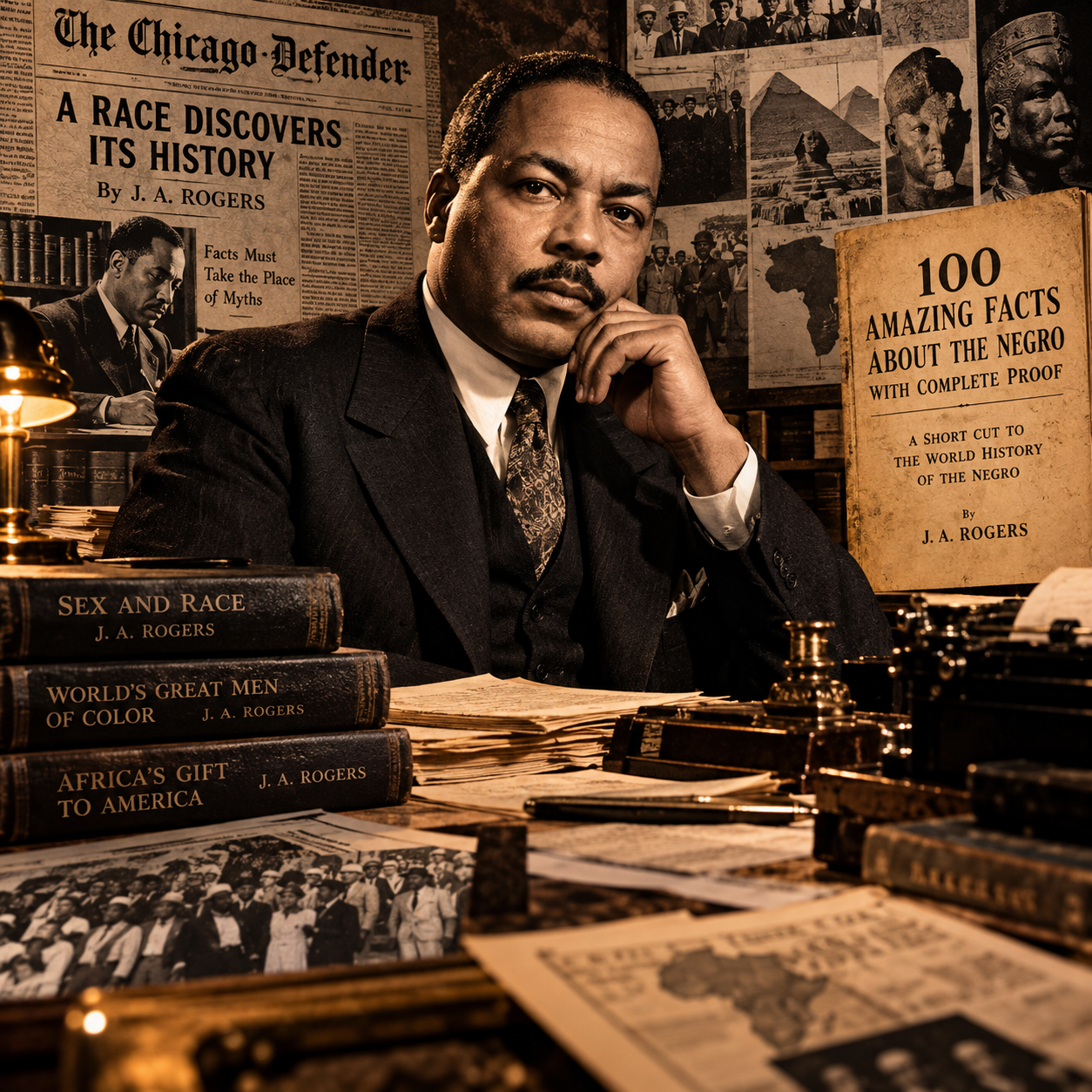
The Man Behind the Amazing Facts Tradition
Before BHED’s 101 & Counting, J.A. Rogers was using startling historical discoveries — and insisting upon “Complete Proof” — to teach Black history.
Meet J.A. RogersExplore the Collection
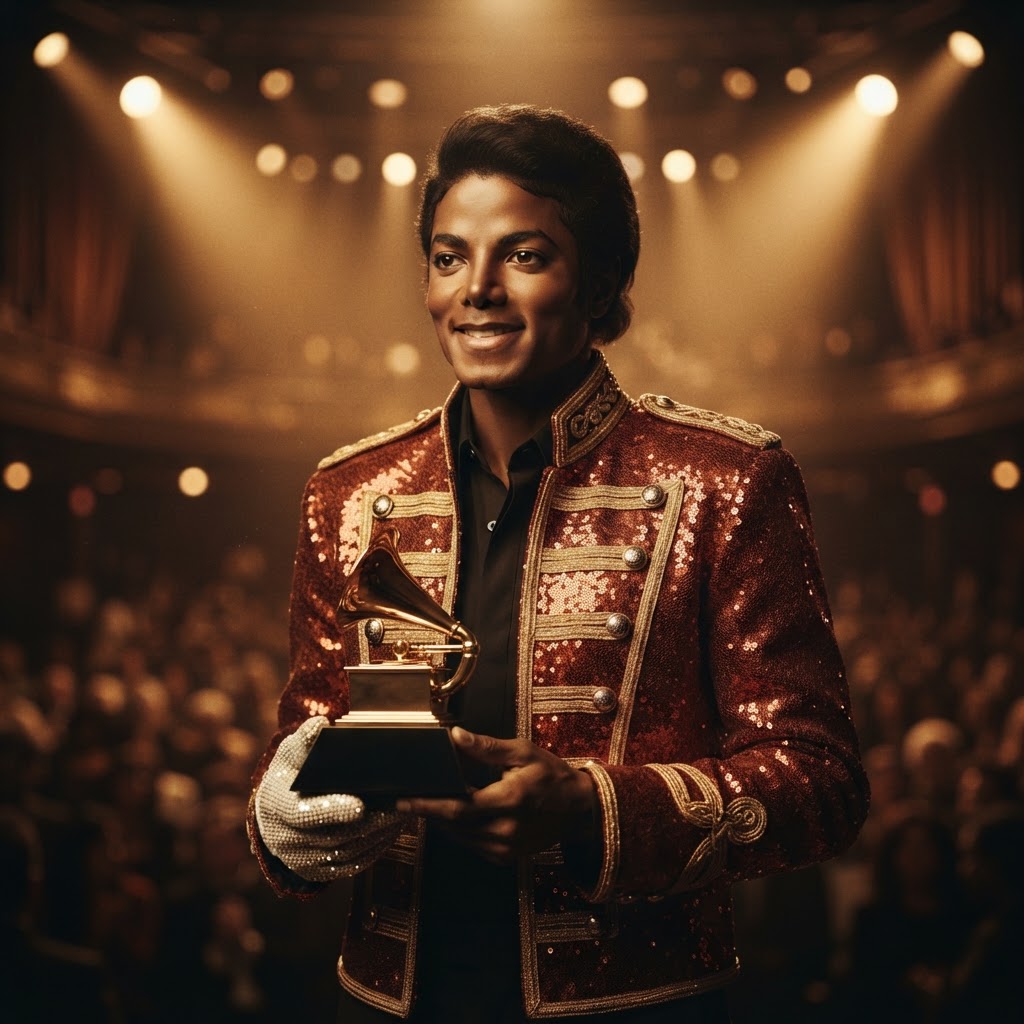
Michael Jackson — Still Breaking Billion-Dollar Records
Michael Jackson's **Thriller** remains the world's best-selling album; his estate has generated **more than $3.5 billion since his 2009 death**; and the 2026 film **Michael** became the highest-grossing music biopic at **$1.016 billion worldwide**.

Floyd Mayweather — 50–0 and a $600 Million Fight
Floyd Mayweather Jr. finished his professional career **50–0**. His 2015 fight with Manny Pacquiao generated about **$600 million in gross revenue** and **4.6 million pay-per-view buys**.
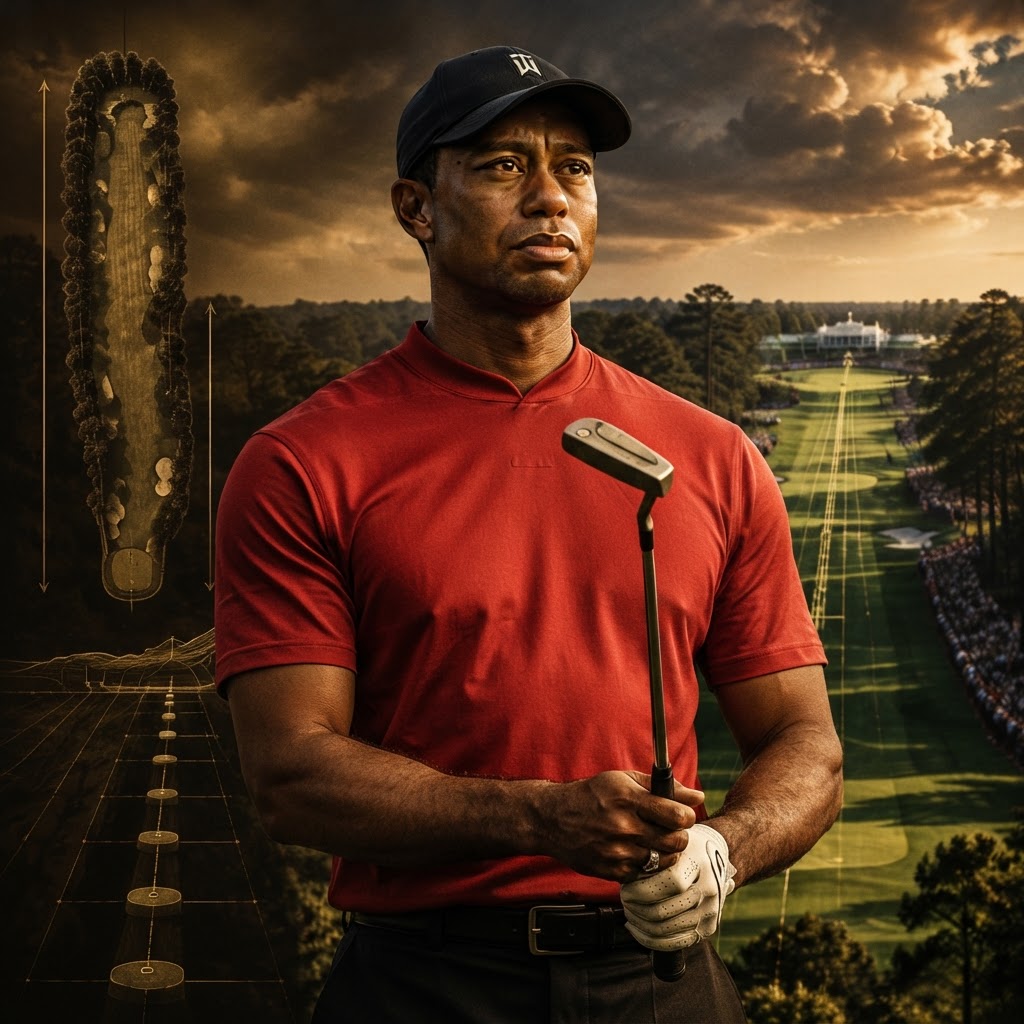
Tiger Woods — They Changed the Golf Course
Tiger Woods became so dominant that golf-course changes were widely described as **“Tiger-proofing.”** Forbes later documented **$1.7 billion in career earnings** by 2022.

Serena Williams — $94.8 Million on the Court
Serena Williams earned **$94,816,730 in WTA career prize money**, the highest total on the WTA's all-time career prize-money list.

Michael Jordan — The $7 Billion Jordan Brand
Nike reported **$7.034 billion in Jordan Brand revenue for fiscal 2026** — roughly $19 million in sales per day across the year.
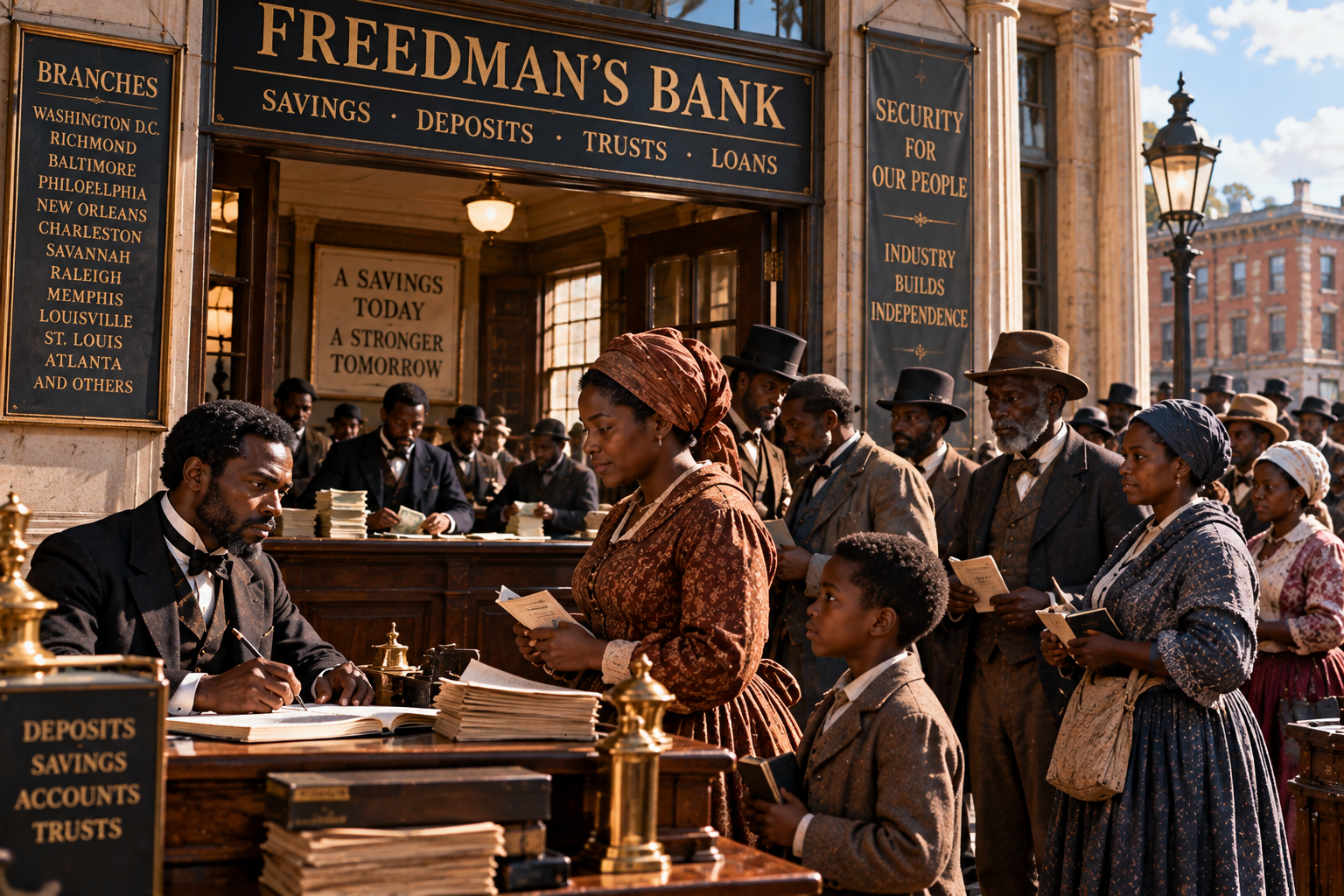
$57 Million Through Freedom’s Bank
During its nine-year history, the Freedman’s Savings and Trust Company served more than 70,000 depositors and handled more than $57 million in deposits. The institution established roughly 37 branches across 17 states and the District of Columbia before closing in 1874.
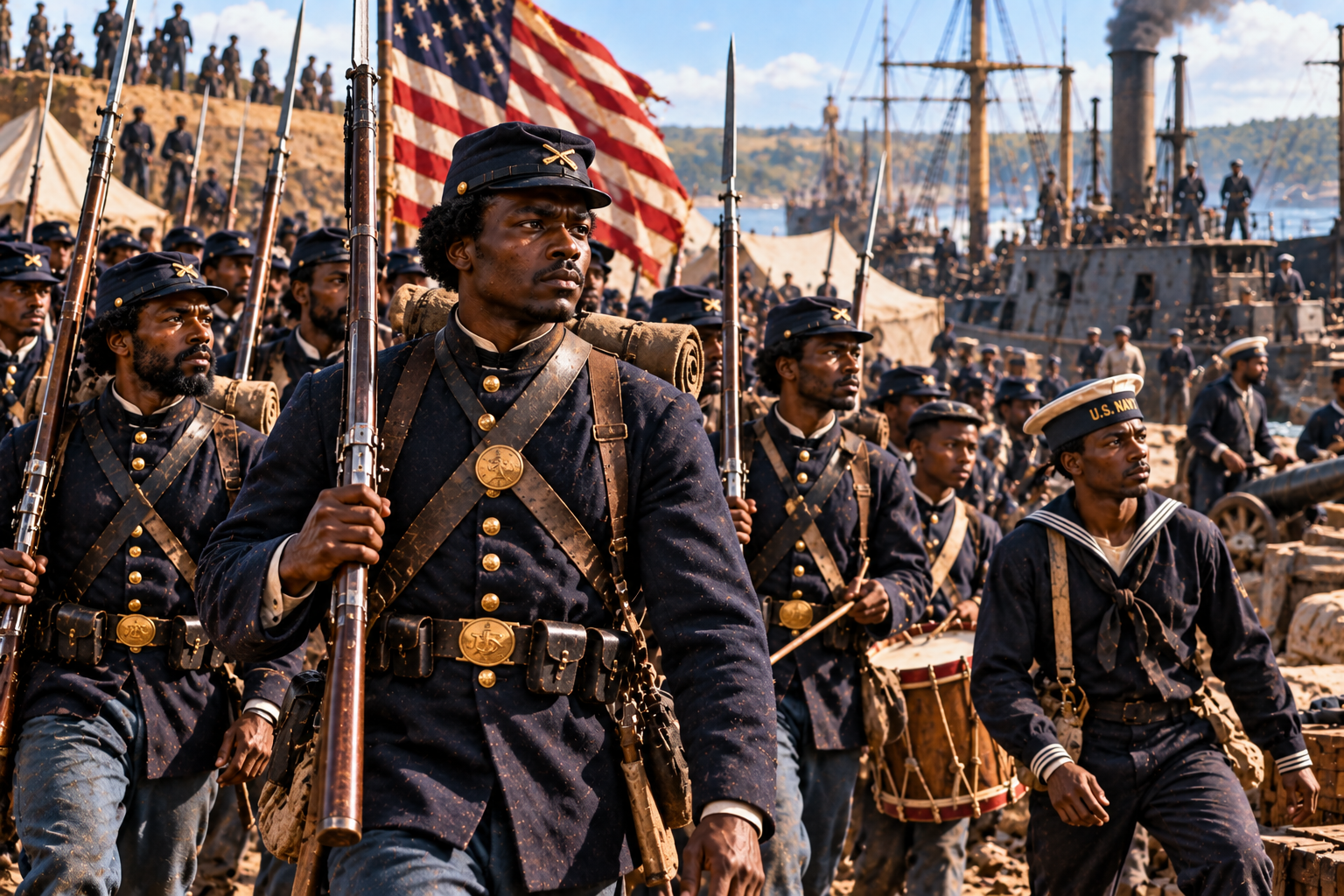
One Out of Every Ten Union Soldiers Was Black
By the end of the Civil War, roughly 179,000 Black men had served as soldiers in the U.S. Army — about 10 percent of the entire Union Army. Another roughly 19,000 Black men served in the U.S. Navy.
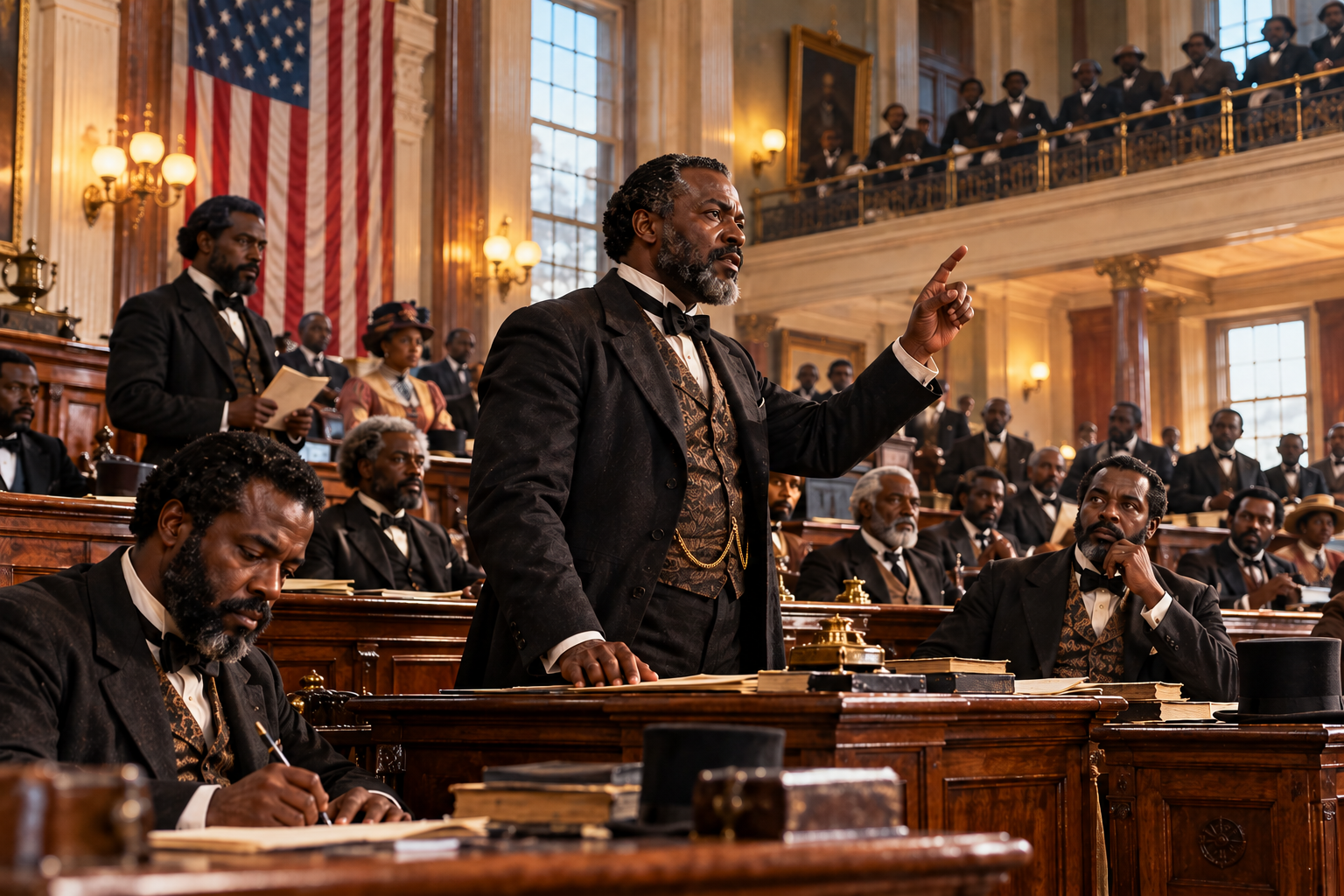
From Enslavement to Government
By 1877, roughly 2,000 Black men had held local, state, and federal offices throughout the South during Reconstruction.
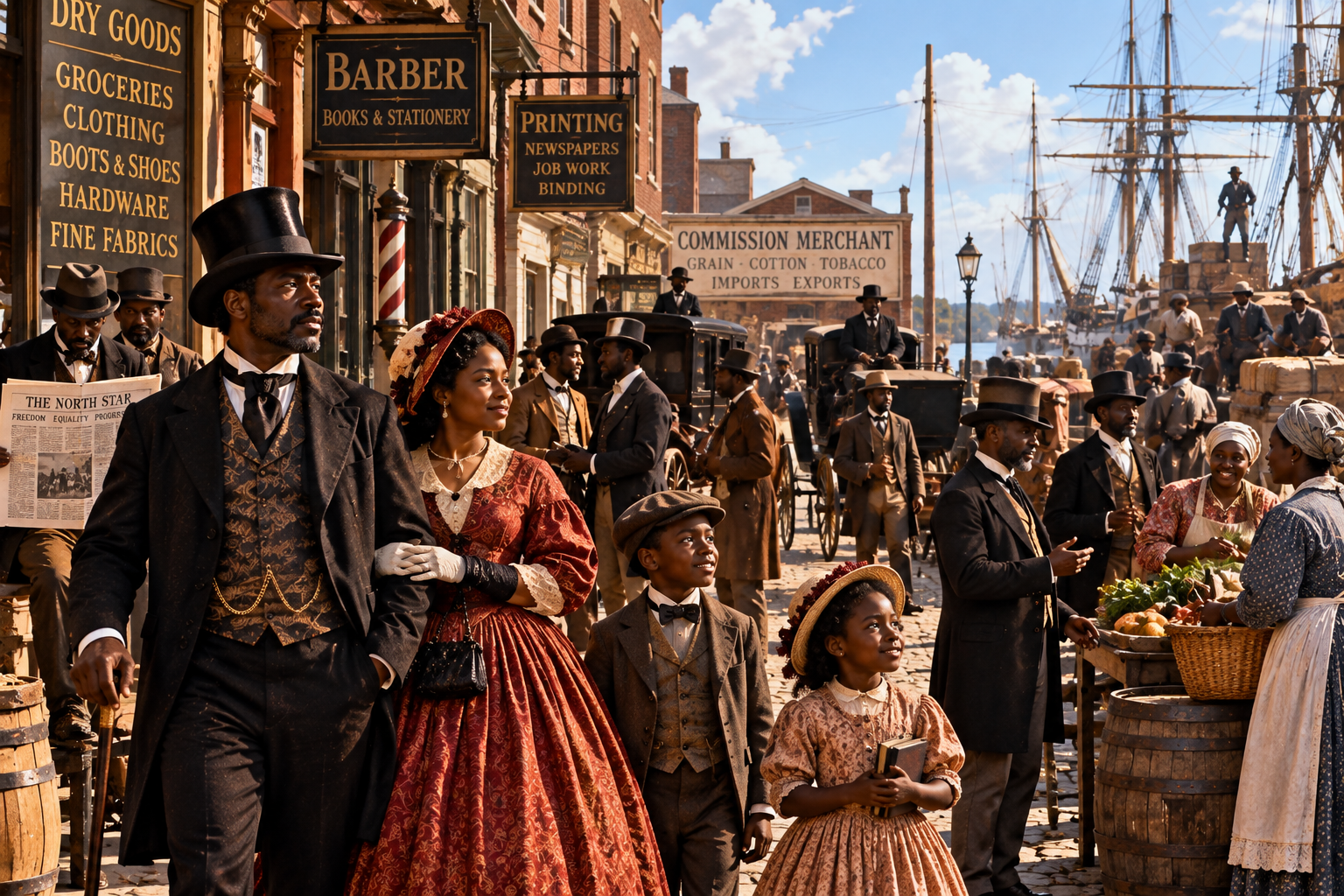
Nearly Half a Million Were Already Free
In 1860, before the Civil War and nationwide emancipation, the United States contained 488,070 free Black people while 3,953,760 Black people remained enslaved. That means roughly 11 percent of the approximately 4.44 million Black people counted in those two legal conditions were already free — about one out of every nine.
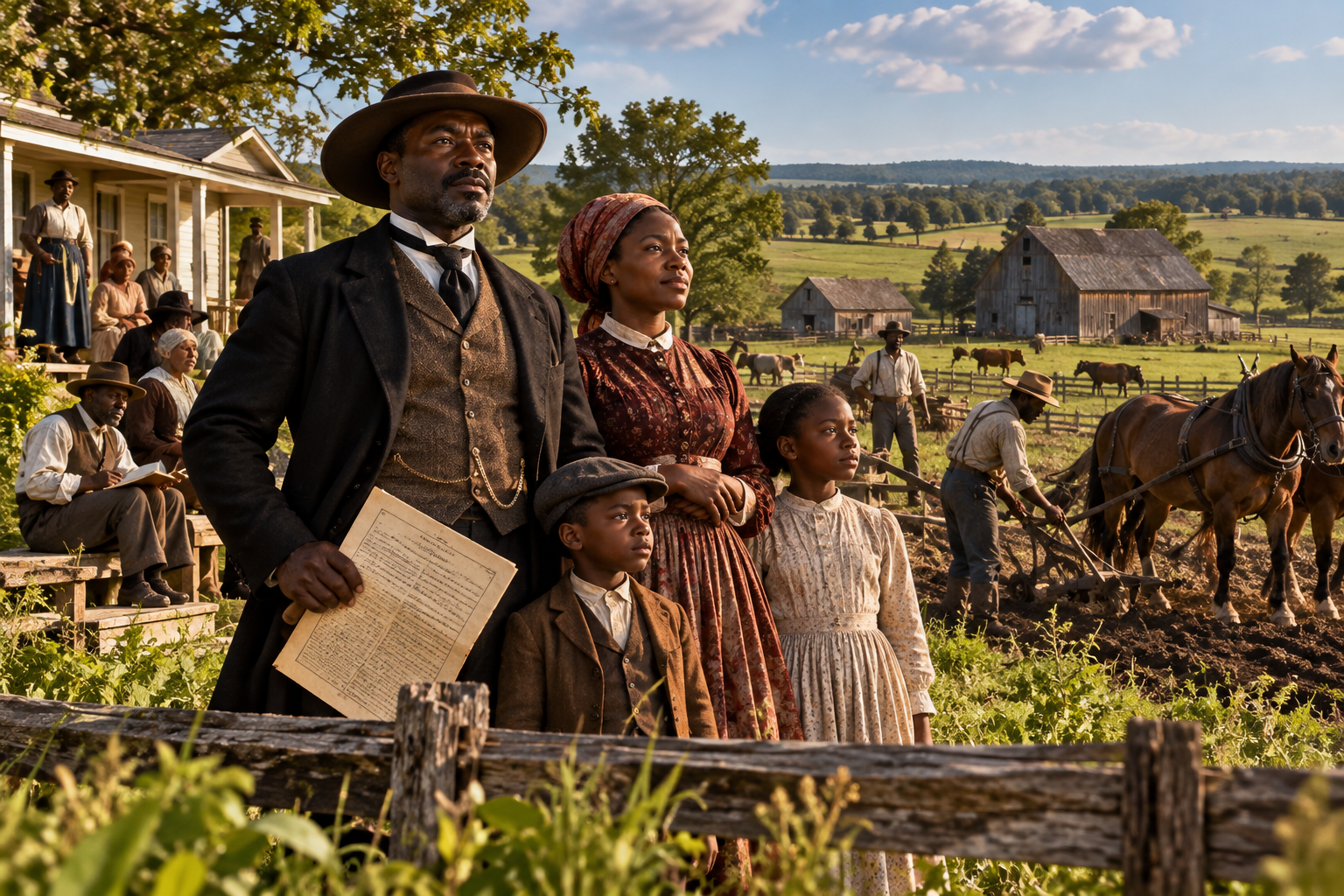
From Slavery to 12.8 Million Acres
By 1910, Black farmers in the South fully or partly owned more than 12.8 million acres of farmland — the historical acreage peak recorded by the agricultural census.
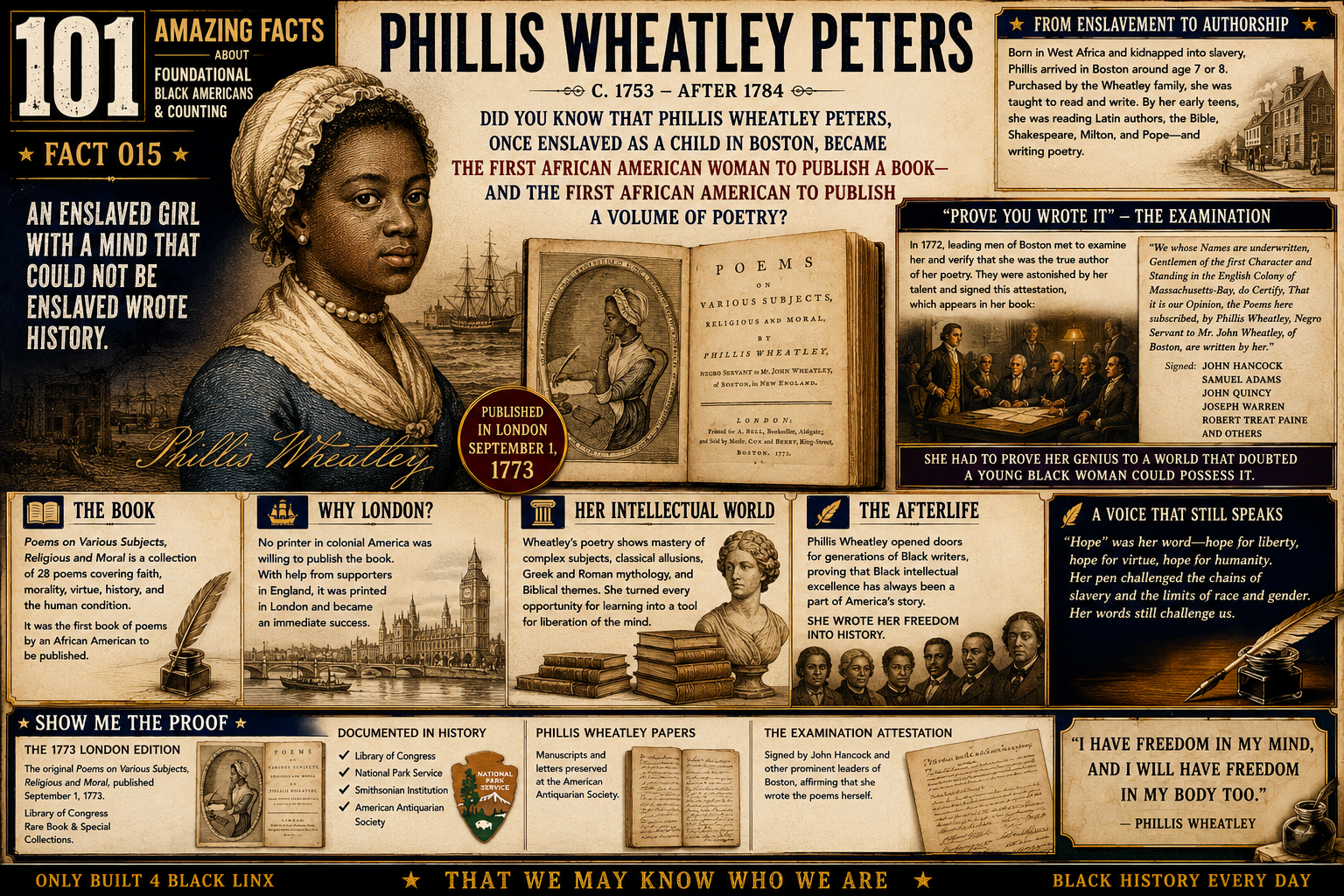
Phillis Wheatley Peters
Did you know an enslaved West African girl in Boston became the first African American to publish a book—and Boston's leading white men had to examine her in person to believe she wrote it?
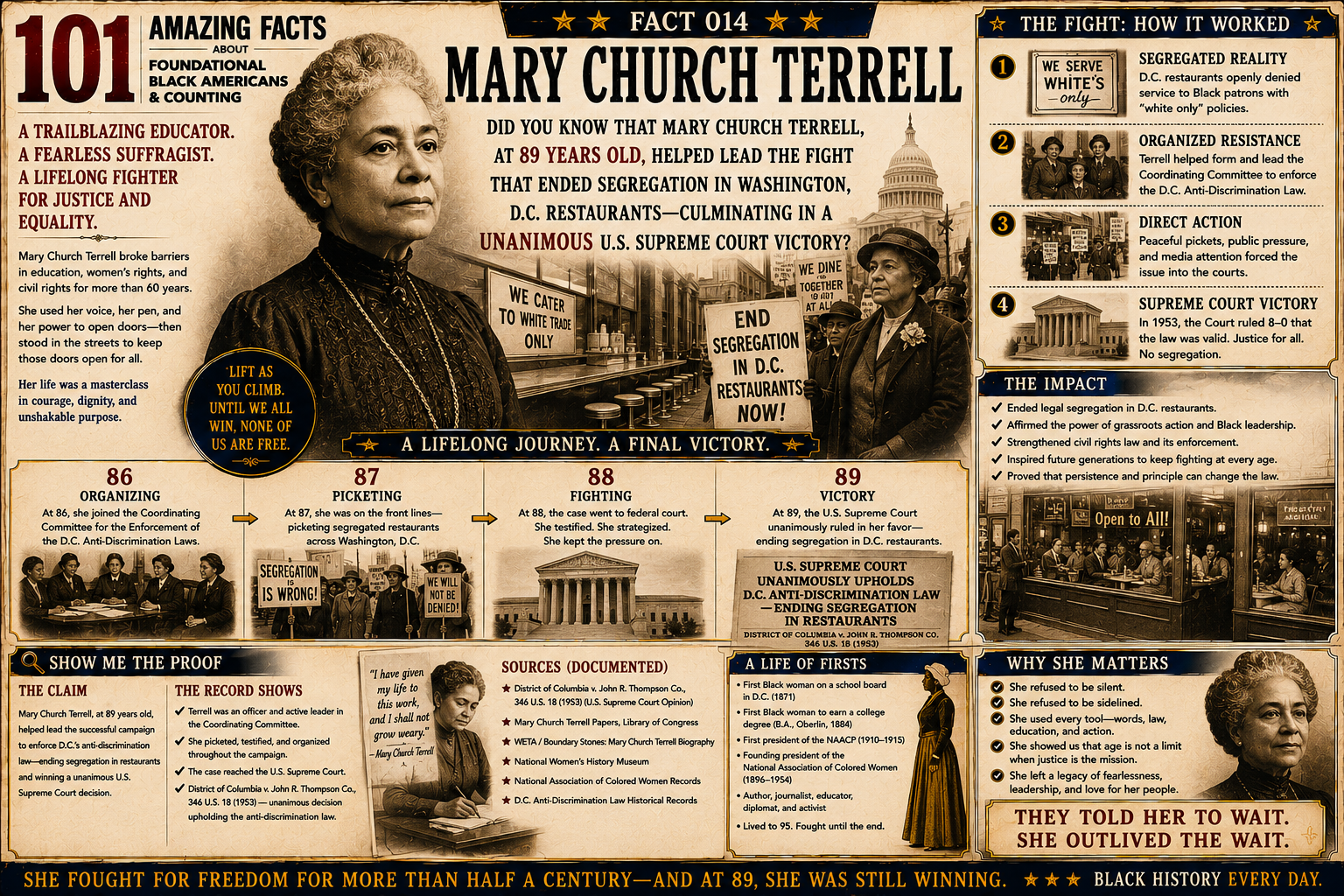
Mary Church Terrell
Did you know the Supreme Court case that ended legal segregation in D.C. restaurants was won in 1953—by a woman who was 89 years old and had been fighting Jim Crow for over 60 years?
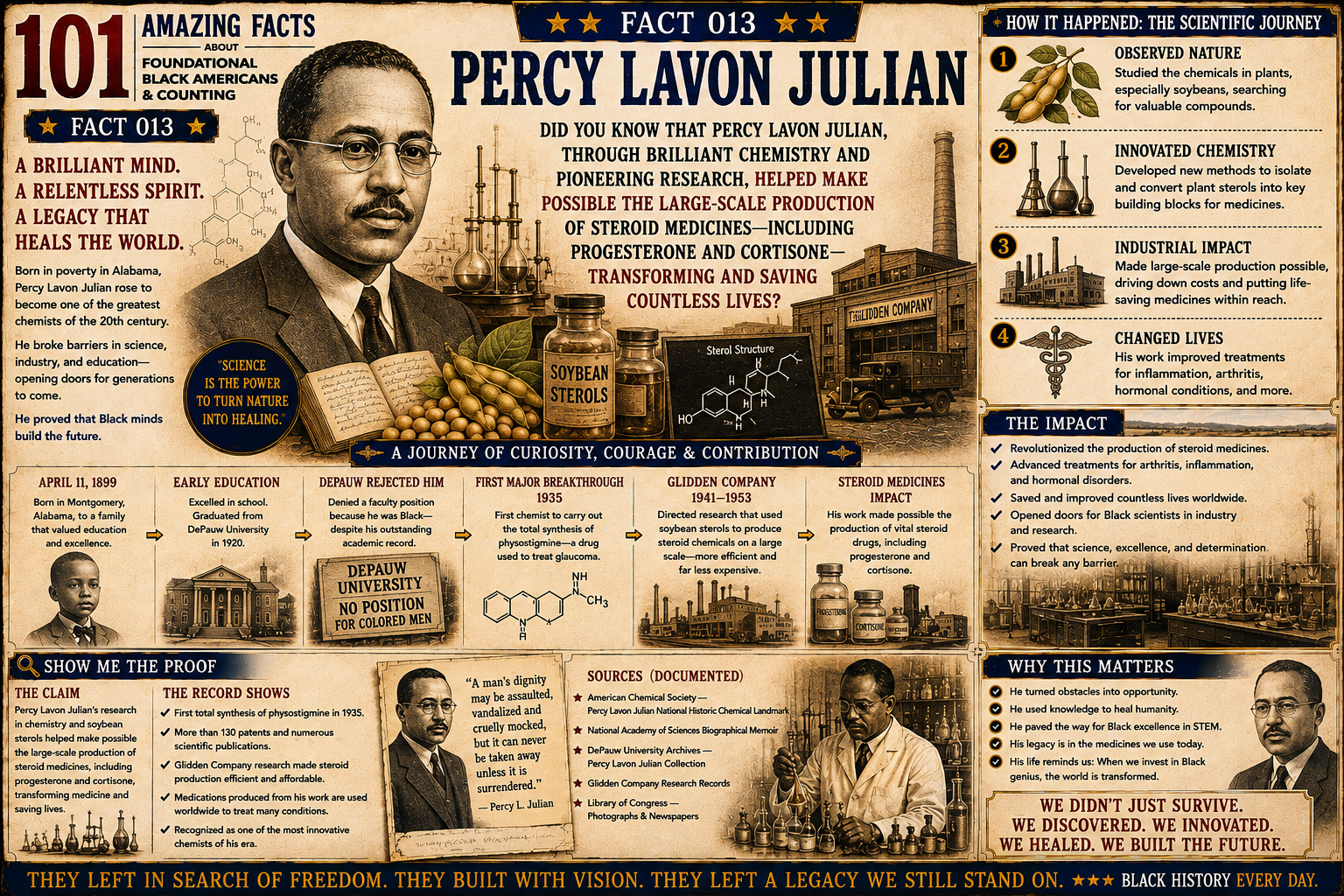
Percy Lavon Julian
Did you know a Black American chemist, refused a faculty post because of his race, pioneered the chemistry that helped make cortisone affordable and laid part of the foundation for the birth-control pill?
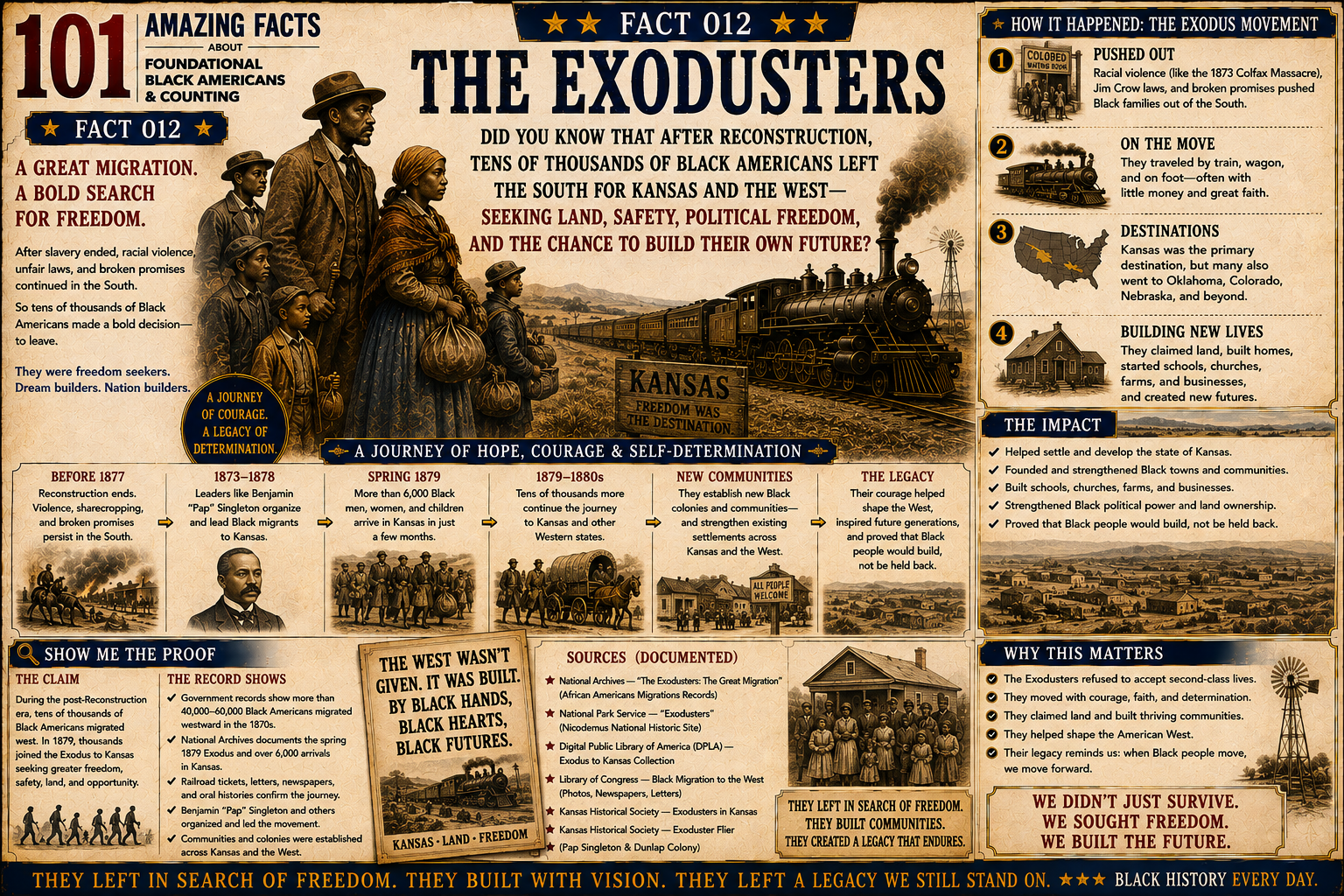
The Exodusters
Did you know a decade before the Great Migration, tens of thousands of Black Americans left the post-Reconstruction South for Kansas—the first major voluntary mass migration of African Americans in U.S. history?
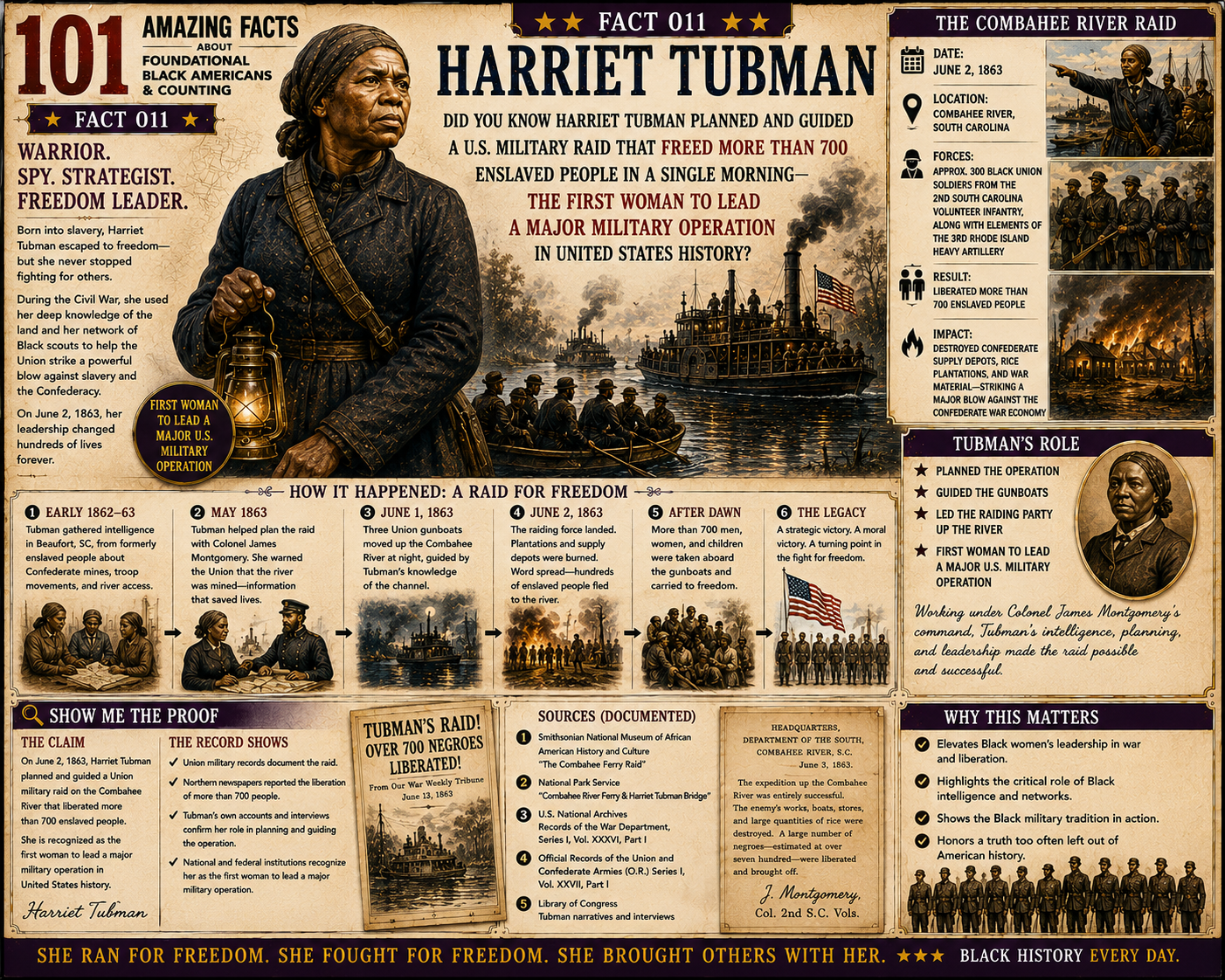
Harriet Tubman and the Combahee River Raid
Did you know Harriet Tubman planned and guided a U.S. military raid that freed more than 700 enslaved people in a single morning—the first woman to lead a major military operation in United States history?
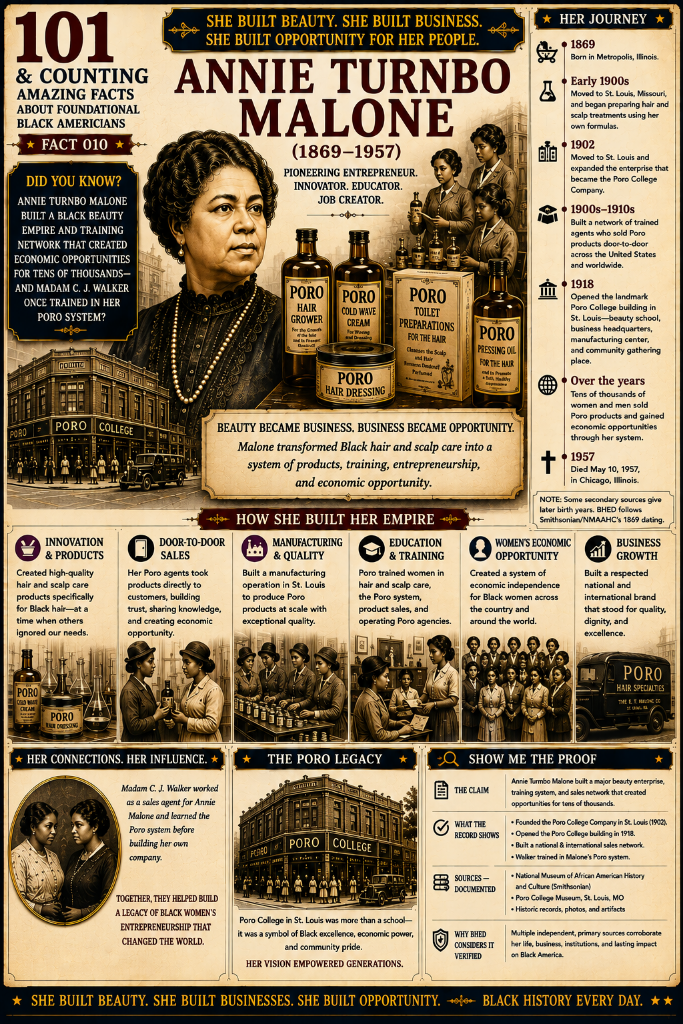
Annie Turnbo Malone
A Black American woman built a beauty empire and training network that created economic opportunities for tens of thousands—and Madam C. J. Walker worked as a sales agent for her and learned the Poro system before building her own company.
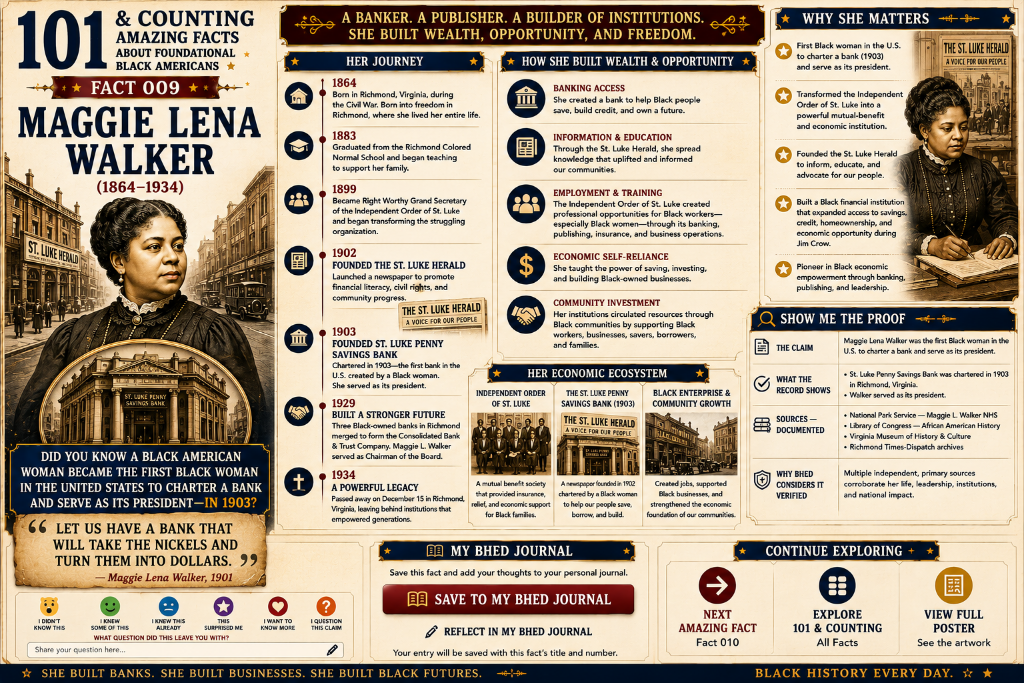
Maggie Lena Walker
A Black American woman became the first in the United States to charter a bank and serve as its president—in 1903.
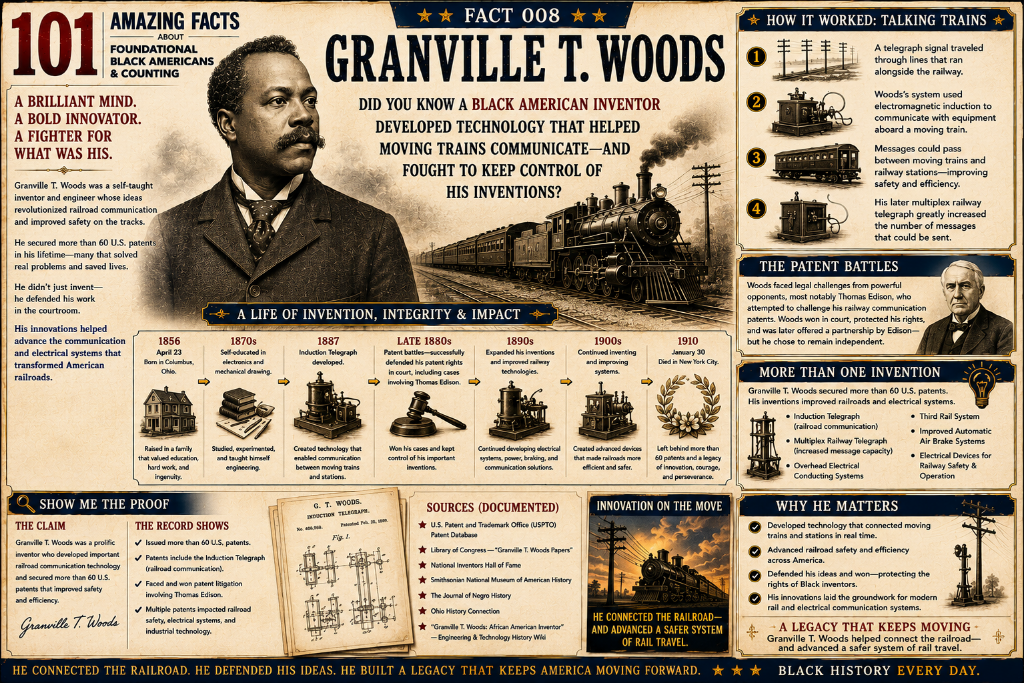
Granville T. Woods
Did you know a Black American inventor patented a system that let moving trains talk to each other for the first time—and twice defeated Thomas Edison in court when he tried to claim credit?
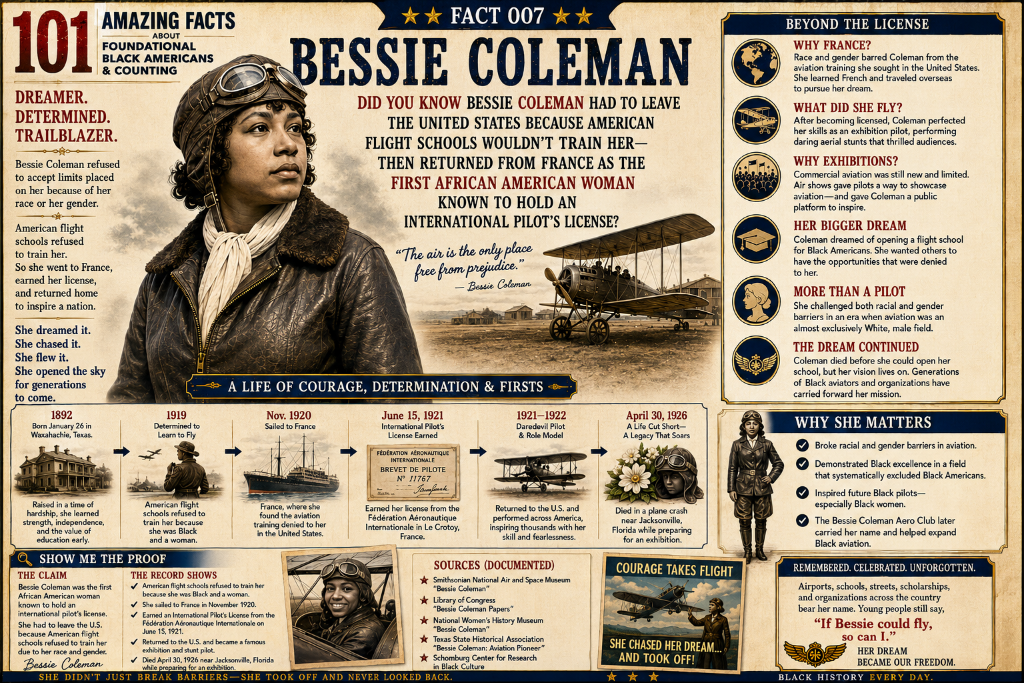
Bessie Coleman
Did you know Bessie Coleman had to leave the United States because American flight schools wouldn't train her—then returned from France as the first African American woman known to hold an international pilot's license?
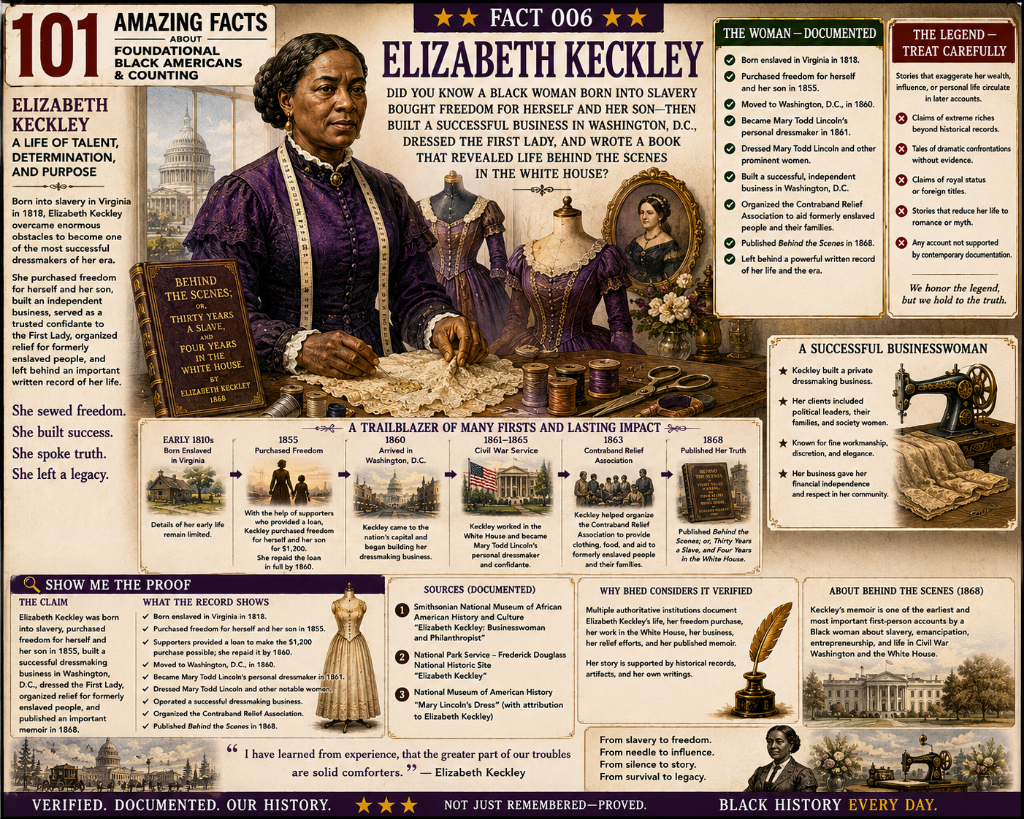
Elizabeth Keckley
Did you know a Black woman born into slavery purchased her own freedom and her son's—then built a successful dressmaking business in Washington, D.C.?
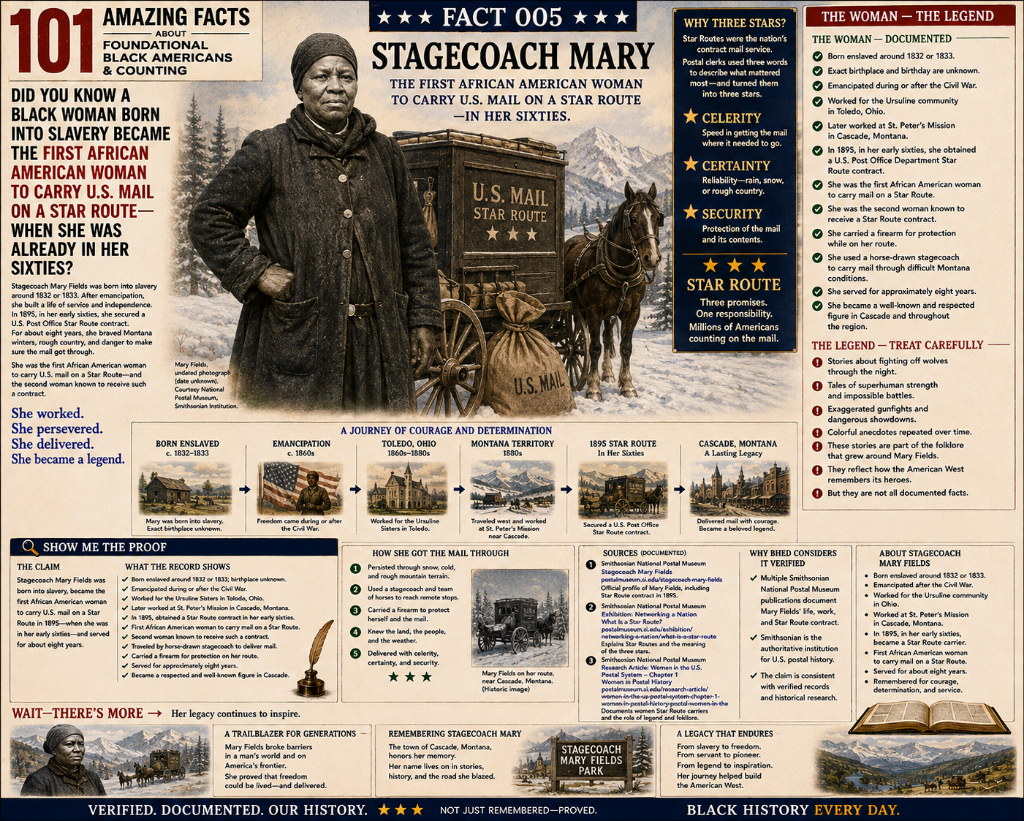
Stagecoach Mary Fields
Did you know a Black woman born into slavery became the first African American woman to carry U.S. mail on a Star Route—when she was already in her sixties?
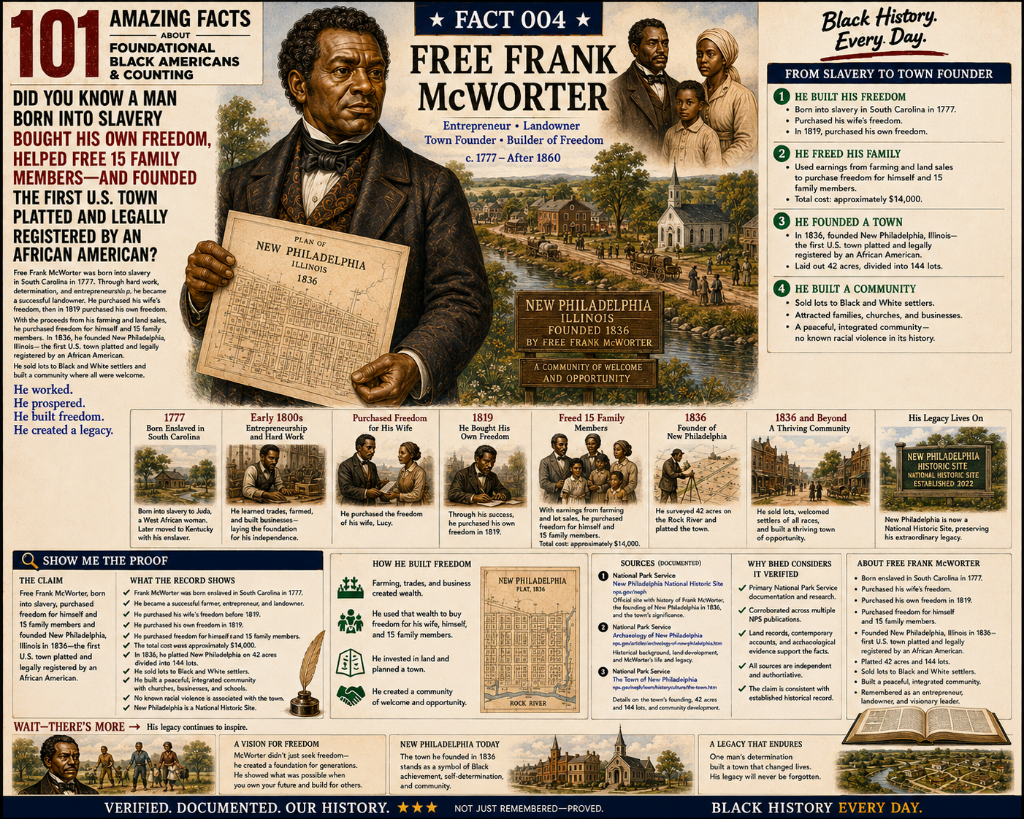
Free Frank McWorter
Did you know a man born into slavery bought his own freedom, helped free 15 family members—and founded the first U.S. town platted and legally registered by an African American?
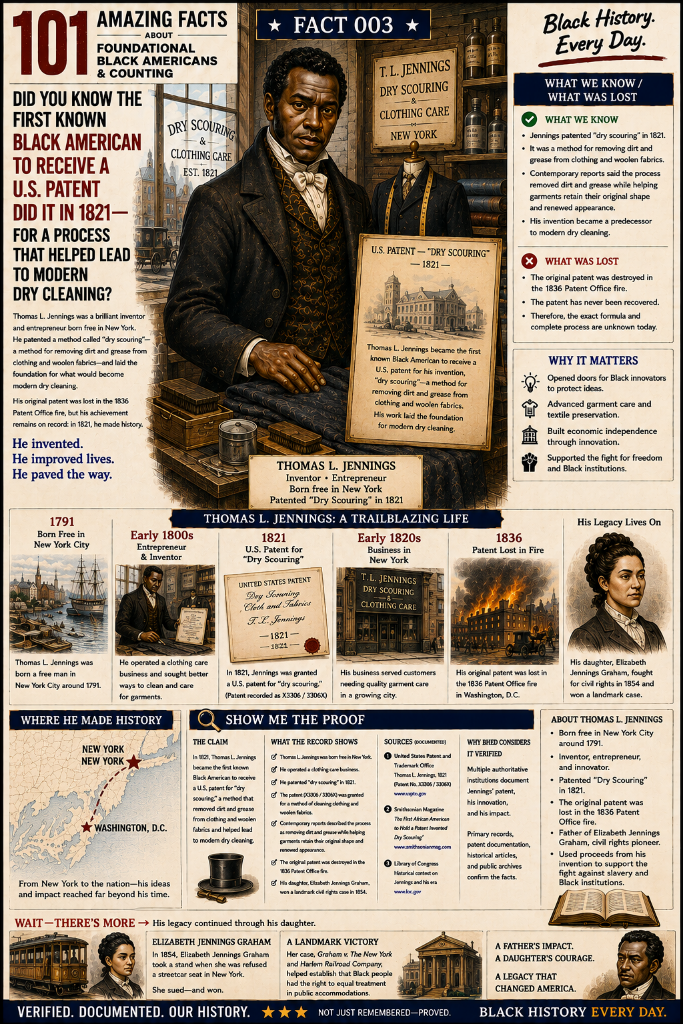
Thomas L. Jennings
Did you know the first known Black American to receive a U.S. patent did it in 1821—for a process that helped lead to modern dry cleaning?
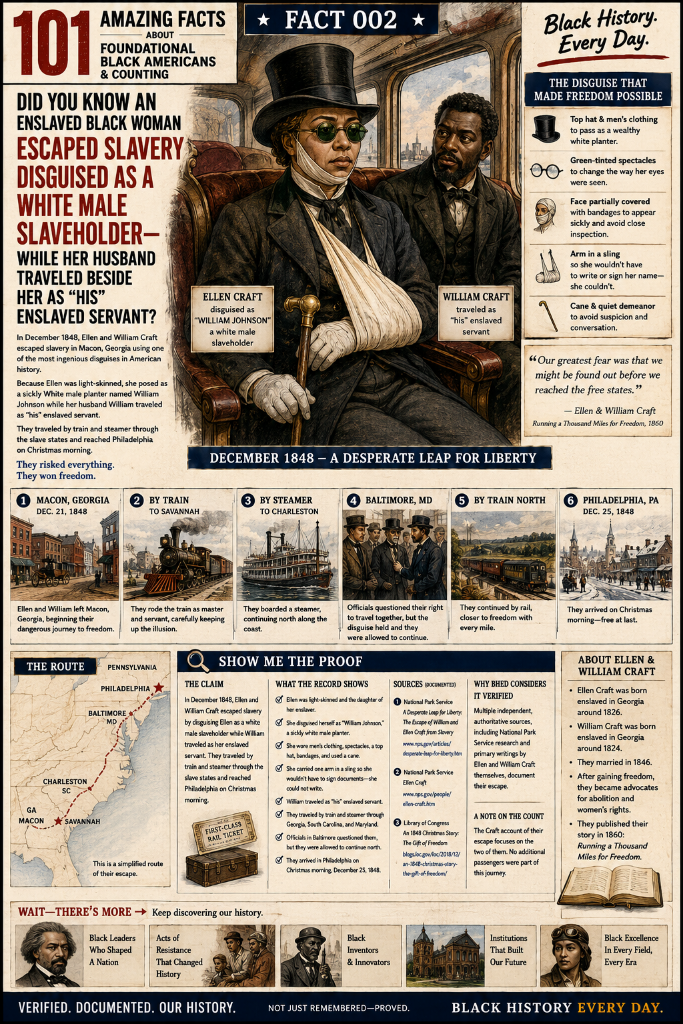
Ellen & William Craft
Did you know an enslaved Black woman escaped slavery disguised as a White male slaveholder—while her husband traveled beside her as "his" enslaved servant?
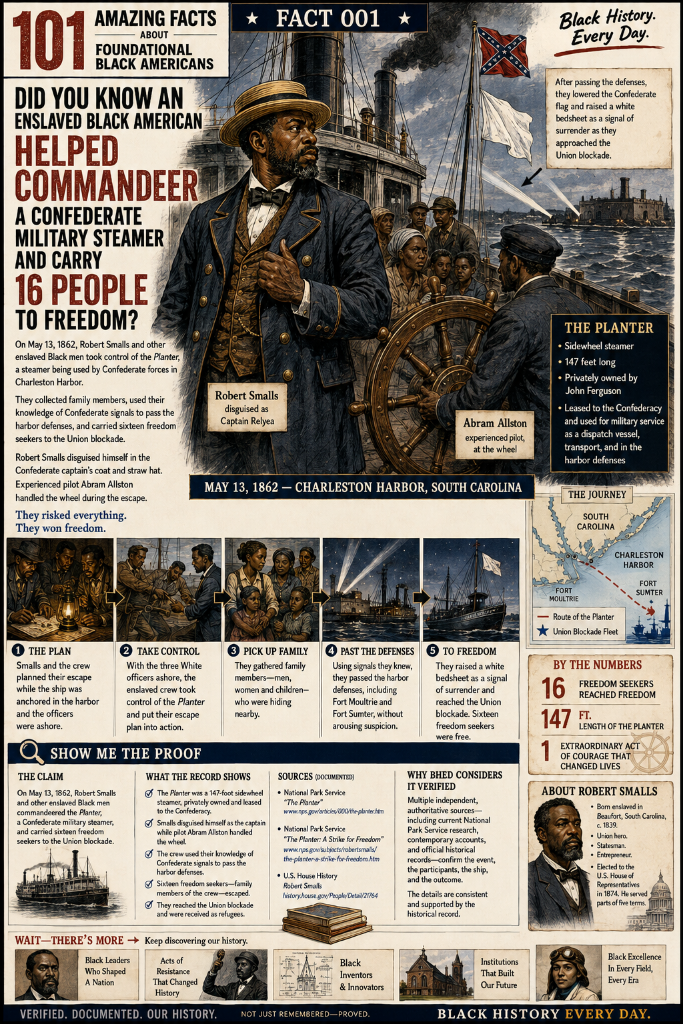
Robert Smalls and the Planter
Did you know an enslaved Black American helped commandeer a Confederate military steamer and carry 16 people to freedom?